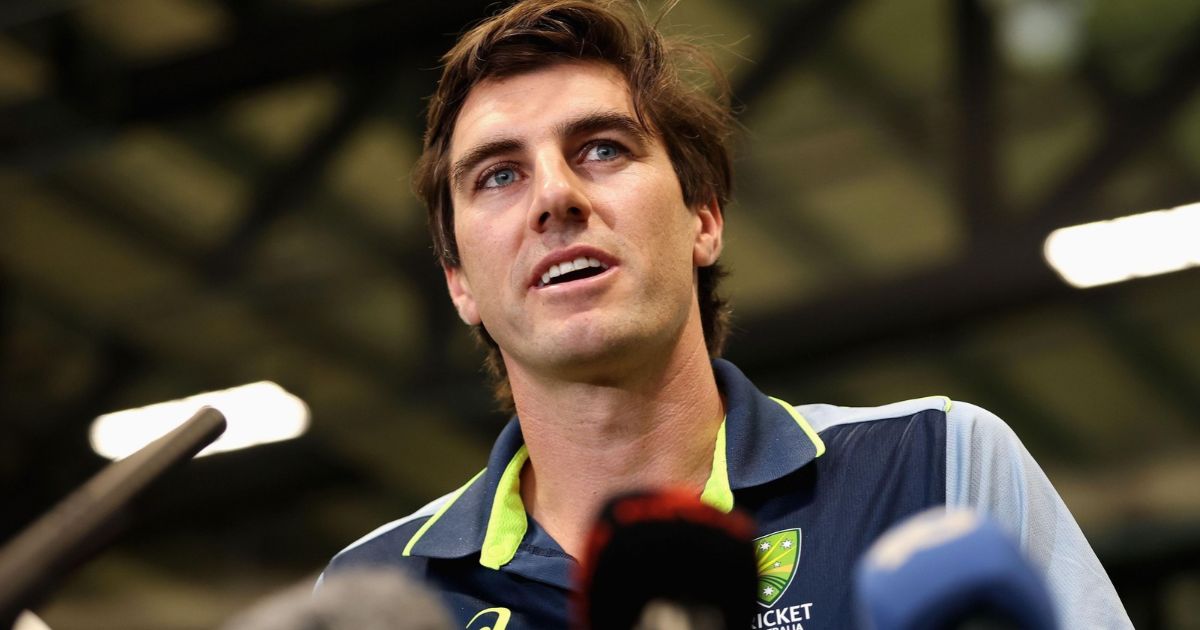
Pat Cummins insisted that Australia’s players knew nothing about the infamous 2018 ball-tampering plot beyond the three men who were punished. Now, Cameron Bancroft has sensationally contradicted the Australian captain, claiming the entire team knew about the use of sandpaper and that he, Steve Smith and David Warner were left to shoulder the blame for a scandal that went much deeper.
ALSO READ: Sandpapergate Revisited: The Scandal That Rocked Australian Cricket In South Africa.
Eight years after the infamous Sandpapergate scandal rocked Australian cricket, current Test captain Pat Cummins finds himself at the centre of an extraordinary controversy that threatens to undermine his credibility and reopen one of the darkest chapters in the country’s sporting history.
The controversy erupted following the release of Usman Khawaja’s autobiography, Sabr, in which the former Australian opener alleged that the entire team knew about the illegal use of sandpaper during the 2018 Test series against South Africa.
Cummins responded with an emphatic denial, dismissing Khawaja’s claims and insisting that he had no knowledge of the ball-tampering operation.
However, just days later, Cameron Bancroft, the man caught using sandpaper during the third Test at Newlands, broke his silence with an explosive account that directly contradicted the Australian captain.
Bancroft claimed that knowledge of the cheating extended throughout the dressing room and admitted that he deliberately withheld information during Cricket Australia’s original investigation to protect his teammates.
His revelations raise an uncomfortable question: Did Cummins knowingly mislead the public while allowing Bancroft, Smith and Warner to carry the consequences of a scandal that involved far more people?
While that allegation has not been independently proven, the conflicting accounts have placed enormous pressure on Cummins to explain his version of events.
CAM BANCROFT'S BOMBSHELL SANDPAPERGATE TELL-ALL 💣
— Fox Cricket (@FoxCricket) November 18, 2026
The Aussie batter caught using sandpaper in Cape Town is ready to talk.
He admits he hid the truth behind what happened, including who was involved in the ball-tampering plot.
He says he spoke with the bowlers during the… pic.twitter.com/NGxkWeQkoB
Cummins’ Denial: The Press Conference That Sparked A Firestorm
On 13 November, Cummins faced the media in Sydney following the explosive allegations contained in Khawaja’s autobiography.
Rather than acknowledge the possibility that the original investigation had failed to uncover the full extent of the wrongdoing, the Australian captain strongly rejected suggestions that the entire team knew about the use of sandpaper.
Cummins insisted that he had never been aware of Bancroft taking sandpaper onto the field and denied participating in any plan to illegally alter the condition of the ball.
He described the accusations as “complete and utter nonsense” and maintained that Khawaja’s version of events was entirely incorrect.
The Australian captain also questioned Khawaja’s decision to reveal the allegations, suggesting that his former teammate had been irresponsible with the reputations of those involved.
However, Cummins’ aggressive response has now become a central part of the controversy.
His denial was not simply a disagreement about minor details. It challenged the credibility of Khawaja’s account and reinforced the longstanding narrative that only three Australian players were responsible for the scandal.
That narrative has now been directly challenged by one of the three men who were punished.
Bancroft Breaks His Silence: ‘We All Knew’
On Wednesday, 18 November, Bancroft published an extraordinary account of Sandpapergate, confirming that he had not provided Cricket Australia with the full truth during its 2018 investigation.
The former Australian opener claimed that the entire team knew about the use of sandpaper and that he had withheld important information about the involvement and awareness of others.
Most damagingly for Cummins, Bancroft revealed that the captain’s recent press conference was the deciding factor behind his decision to finally speak publicly.
He described feeling angry, betrayed and isolated after hearing Cummins deny knowledge of the operation.
Bancroft’s account suggests that the Australian captain’s public version of events was inconsistent with what he witnessed during the South African tour.
The former opener also revealed that he regularly discussed the condition of the ball with Australia’s fast bowlers, including Cummins, Mitchell Starc and Josh Hazlewood.
According to Bancroft, he sought feedback about whether the ball was generating sufficient reverse swing and adjusted his work on the ball accordingly.
This is a particularly significant allegation because Australia’s bowlers have repeatedly denied knowing that sandpaper was being used.
Although conversations about reverse swing do not automatically prove knowledge of illegal ball-tampering, Bancroft’s account directly challenges the suggestion that the bowling group was entirely unaware of his activities.
For Cummins, the issue is now considerably more serious than simply defending his reputation against allegations in a former teammate’s autobiography.
He must contend with the testimony of the player who physically carried out the cheating.
Were Bancroft, Smith And Warner Thrown Under The Bus?
Perhaps the most disturbing aspect of Bancroft’s revelations is the possibility that three players were made to carry responsibility for wrongdoing that extended beyond them.
When Sandpapergate erupted in March 2018, Cricket Australia’s investigation identified Bancroft, Smith and Warner as the individuals responsible.
Smith and Warner received 12-month suspensions, while Bancroft was banned for nine months.
The punishments were severe and had lasting consequences.
Smith lost the Australian captaincy, Warner was barred from leadership positions, and Bancroft’s international career never recovered.
Meanwhile, the remaining members of Australia’s bowling attack continued their careers without facing sanctions over the incident.
Cummins eventually became one of the most influential figures in Australian cricket, leading the national team to major international success and earning widespread admiration for his leadership.
That contrast is precisely why the latest allegations are so explosive.
If Bancroft’s account is accurate, it raises the possibility that the three sanctioned players were left to absorb the consequences of a collective failure while others escaped accountability.
Bancroft has openly acknowledged that he chose to conceal information to protect his teammates.
That admission complicates the picture because it means he was not simply an innocent victim of an investigation. He participated in the cheating and subsequently helped preserve an incomplete account of what happened.
Nevertheless, his claim that he carried responsibility on behalf of others raises serious questions about the fairness of the original disciplinary process.
For years, Smith, Warner and Bancroft were publicly associated with one of Australian cricket’s greatest embarrassments.
Now, Bancroft is suggesting that the blame should never have stopped with them.
The Biggest Question: Why Did Cummins Deny Everything?
Cummins’ position is especially difficult because his denial was unequivocal.
He did not merely argue that he had played no direct role in planning the use of sandpaper. He insisted that he had no knowledge of the illegal activity.
Bancroft, meanwhile, claims that he discussed the effectiveness of his work on the ball with Cummins and other bowlers during the series.
Both accounts cannot be entirely accurate if they refer to the same knowledge and conversations.
However, there remains an important distinction between knowing that a ball was reverse swinging and knowing that sandpaper was responsible.
That distinction could prove central to any further examination of the scandal.
Cummins may maintain that he discussed the ball’s behaviour without knowing how its condition had been illegally altered. Bancroft’s account suggests a much wider understanding of the operation.
The disagreement is fundamental, and it cannot be resolved simply by accepting one player’s recollection over another’s.
Nevertheless, Cummins’ decision to publicly dismiss Khawaja’s allegations has arguably intensified the damage to his reputation.
Rather than allowing the revelations to be examined independently, the Australian captain placed his own credibility at the centre of the dispute.
Bancroft’s subsequent intervention has made that decision look increasingly risky.
If further evidence supports the former opener’s account, Cummins could face serious questions about why he continued to defend a version of events that others involved now reject.
David Warner And Usman Khawaja Refuse To Stay Silent
Bancroft is not the only former Australian player challenging the original Sandpapergate narrative.
Khawaja’s autobiography provided the catalyst for the renewed controversy, with the former opener claiming that knowledge of the cheating was widespread and that sandpaper had been used during the preceding Test in Gqeberha.
Warner subsequently supported Khawaja’s account and questioned the thoroughness of Cricket Australia’s original investigation.
The former vice-captain also criticised Cummins’ public response, accusing him of unfairly attacking Khawaja for discussing what happened.
Former Australian squad member Chadd Sayers has similarly claimed that knowledge of the sandpaper operation extended throughout the dressing room.
These accounts are significant because they challenge the idea that Bancroft, Smith and Warner acted in complete isolation.
However, the players’ recollections are not identical, and the extent of each individual’s knowledge remains disputed.
It would therefore be premature to conclude that every Australian player was directly involved in the cheating.
What is increasingly difficult to dismiss is the need for a more complete explanation of how the operation developed, who knew about it and why only three players were sanctioned.
Final Thoughts: Did Australian Cricket Sacrifice Three Players To Protect The Rest?
Eight years after Sandpapergate, Australian cricket is confronting the possibility that its most infamous scandal was never fully explained.
For years, Bancroft, Smith and Warner were presented as the three men responsible for an act of cheating that embarrassed an entire nation.
They were suspended, publicly condemned and forced to rebuild their careers while other members of the team moved forward.
Now, Bancroft has admitted that he concealed important information and claims that knowledge of the operation extended throughout the Australian dressing room.
His revelations have placed Cummins in an extraordinarily uncomfortable position.
The Australian captain’s emphatic denial of Khawaja’s allegations has been directly challenged by the man who was caught with sandpaper in his hands.
That does not conclusively establish that Cummins lied. But it does raise serious questions about whether the public has been given an accurate account of what happened in South Africa.
Perhaps the most troubling possibility is that the three sanctioned players were left carrying the consequences of a much wider failure.
If that is eventually established, the scandal will no longer be remembered solely for the act of cheating at Newlands.
It will also be remembered for the way responsibility was distributed afterwards.
Pat Cummins has insisted that he knew nothing about the sandpaper. Cameron Bancroft says the whole team knew. Eight years later, Australian cricket still owes the public a convincing explanation of that contradiction.

Lwanele is the Content Manager for BetJets News and has dedicated six years to creating top-notch sports betting content for major bookmakers, establishing himself as a trusted source for betting advice. As the resident tipster for TAB’s popular TV show Racing Today, he specialises in cricket, MMA, and soccer betting. Known for his keen analysis and practical tips, Lwanele provides BetJets readers with the tools they need to approach betting with confidence and strategy.