When the Proteas and Australia begin their three-match Test series at Kingsmead next week, some of the world’s best batters will face an unenviable challenge. They’ll be taking on two of the finest bowling attacks in Test cricket.
ALSO READ: Proteas Name 18-Man Preliminary Squad For First Australia Test.
Australia arrive with the formidable quartet of Mitchell Starc, Pat Cummins, Josh Hazlewood and Nathan Lyon, while the Proteas have assembled an exciting arsenal featuring Marco Jansen, Kagiso Rabada, Anrich Nortje, Gerald Coetzee, Corbin Bosch and Keshav Maharaj.
It’s an intriguing battle between Australia’s proven, vastly experienced unit and a South African attack combining established world-class operators with frightening pace and variety.
So, which team has the better bowling attack heading into the series?
Australia: The Gold Standard
If we’re judging purely on pedigree, Australia are difficult to beat.
Starc, Cummins, Hazlewood and Lyon have spent years hunting as a pack and have taken well over 1,500 Test wickets between them.
More importantly, they’re still performing at an elite level.
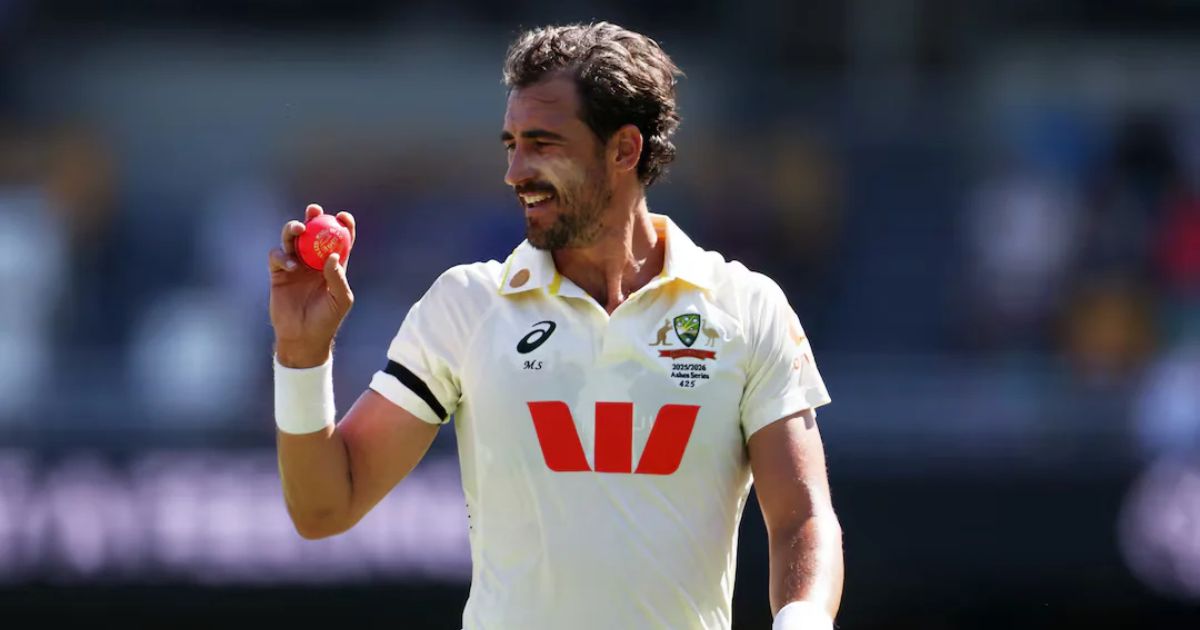
Starc arrives in South Africa as the No. 1-ranked Test bowler in the world, having climbed to the summit for the first time in his career following a devastating 10-wicket performance against Bangladesh in August. The left-armer has taken 17 wickets at an average of 18.24 in three Tests this year after claiming a remarkable 55 at 17.33 in 2025.
Then there’s Cummins.
The Australian captain is currently fifth in the ICC Test bowling rankings and remains one of the most complete fast bowlers of his generation. He can attack with the new ball, break partnerships with an old one and relentlessly hammer a difficult length when conditions aren’t offering much assistance.
Hazlewood brings something different again.
Few bowlers in world cricket are as relentlessly accurate. Currently ranked ninth in Tests, the 35-year-old’s ability to live around the top of off stump should make him particularly dangerous on South African surfaces offering seam movement and bounce.
And when the quicks aren’t getting you, Australia can throw the ball to one of the greatest spinners in their history.
Lyon climbed back into the world’s top 10 following Australia’s recent series against Bangladesh, and his ability to extract bounce makes him a threat even on surfaces traditionally regarded as more favourable to seam bowling.
Scott Boland and Michael Neser provide high-quality seam depth, while Matthew Kuhnemann gives Australia a second frontline spin option if conditions demand it.
There is almost no obvious weakness.
South Africa: Pace, Bounce And X-Factor
If Australia’s greatest strength is their proven consistency, South Africa’s is the sheer variety of ways in which they can attack a batting line-up.
The Proteas’ preliminary squad contains Rabada, Jansen, Nortje, Coetzee, Dane Paterson and Corbin Bosch, while Maharaj, Simon Harmer and Senuran Muthusamy provide three specialist spin options.
And at the centre of the attack is the towering Jansen.
The 2.06m left-armer has developed into one of Test cricket’s premier bowlers and currently sits second in the ICC Test bowling rankings, one place behind Starc. His combination of height, bounce, movement and left-arm angle makes him a nightmare, particularly on South African pitches.
Then there is Rabada.
When fit, KG remains the Proteas’ attack leader and one of the great fast bowlers of his generation.
Australia don’t need reminding of that.
Rabada has taken 58 wickets in 11 Tests against Australia at an average of 21.39, including nine wickets in South Africa’s famous victory over the Aussies in the 2025 World Test Championship final at Lord’s.
That final provided a perfect demonstration of just how dangerous the Proteas can be.
Rabada took five wickets in Australia’s first innings and Jansen claimed three as the defending champions were dismissed for just 212. Australia responded by reducing South Africa to 43/4 through Starc, Cummins and Hazlewood, providing a tantalising preview of the bowling battle we’re about to see again.
The Rabada Question
There is, however, one enormous concern for South Africa.
Will Rabada be fit?
The Proteas spearhead is recovering from a right hamstring injury that ruled him out of the ODI series against Australia.
Cricket South Africa have included him in an extended 18-man preliminary squad and are giving him every opportunity to prove his fitness before the first Test. Coach Shukri Conrad says Rabada’s progress has been encouraging, but the Proteas will assess him during their extended Durban training camp before making a final decision.
His availability could fundamentally alter the balance of this comparison.
A new-ball combination of Rabada and Jansen can compete with virtually anything Australia have.
Without Rabada, South Africa suddenly have to replace not only an elite wicket-taker but the bowler around whom their entire pace attack has traditionally been built.
Enter Nortje And Coetzee
That uncertainty partly explains why the return of Anrich Nortje is so intriguing.
Nortje hasn’t played Test cricket since 2023 and has 70 wickets from 19 Tests, but at his best he offers something few bowlers on either side possess: genuine, intimidating pace.
South Africa could theoretically field Jansen’s awkward left-arm bounce at one end and Nortje’s raw speed at the other.
Then there’s Coetzee, another aggressive fast bowler capable of operating above 140km/h and attacking the body.
Paterson provides almost the opposite skill set. He doesn’t possess Nortje or Coetzee’s velocity, but his control, seam movement and ability to exploit helpful conditions make him an excellent alternative.
Bosch adds further depth as a seam-bowling all-rounder.
South Africa may not know exactly what their attack will look like yet, but Conrad certainly isn’t short of options.
Spin: Lyon vs Maharaj
The spin battle brings together two vastly experienced operators.
Lyon gives Australia something incredibly valuable: a spinner who can be trusted to bowl long spells while remaining an attacking option.
That allows Cummins to rotate his fast bowlers without surrendering control.
South Africa have their own world-class spinner in Maharaj, whose experience in home conditions could become particularly important at Kingsmead.
Maharaj also gives Conrad tactical flexibility. If the Proteas want to play four seamers, he is good enough to operate as the sole specialist spinner. If conditions warrant two, Harmer’s off-spin or Muthusamy’s left-arm orthodox bowling can complement him.
Australia still have the edge in this department because of Lyon’s extraordinary Test pedigree, but Maharaj ensures the difference isn’t enormous.
The South African Conditions Factor
This is where the comparison becomes especially interesting.
The series will be played entirely at coastal venues:
Kingsmead in Durban, St George’s Park in Gqeberha and Newlands in Cape Town.
Those conditions should keep the fast bowlers interested.
Australia’s attack is certainly capable of thriving in South Africa. Starc can swing the ball at high pace, Hazlewood’s seam position is tailor-made for helpful surfaces, and Cummins’ combination of bounce and accuracy travels virtually anywhere.
But the Proteas know these grounds intimately.
Jansen’s height could be particularly awkward; Maharaj has spent much of his career bowling at Kingsmead, and Rabada, should he be available, has repeatedly demonstrated his ability to destroy batting line-ups in South African conditions.
Home advantage therefore helps narrow what might otherwise appear to be a clear Australian advantage.
The Ultimate Test
Perhaps the best evidence of how closely matched these attacks are came the last time the teams played Test cricket against each other.
The 2025 World Test Championship final was dominated by the bowlers for long stretches.
Rabada and Jansen dismantled Australia in the first innings. Starc, Cummins and Hazlewood immediately responded by ripping through South Africa’s top order.
Cummins then claimed six wickets in South Africa’s second innings before Rabada struck again with four in Australia’s second dig. South Africa ultimately survived the examination and won by five wickets to become world Test champions.
Now they’re preparing to do it all over again.
Which Team Has The Better Attack?
There isn’t much in it, particularly if Rabada is fit.
A fully operational combination of Rabada, Jansen, Nortje/Coetzee and Maharaj gives South Africa pace, bounce, left-arm variation, spin and genuine wicket-taking ability throughout the innings.
Jansen is currently the world’s No. 2-ranked Test bowler. Rabada has an outstanding record against Australia. Nortje supplies express pace, while Maharaj provides control and experience.
But Australia still have the stronger attack on paper heading into the series.
Not necessarily because their best bowlers are individually superior, but because their attack is more settled.
Starc is ranked No. 1 in the world. Cummins remains in the top five. Hazlewood is in the top 10. Lyon is back in the top 10.
More importantly, those four have bowled together for years.
South Africa have more uncertainty. Rabada is recovering from injury, Nortje hasn’t played a Test since 2023, and Ngidi, who played a crucial role when these teams met at Lord’s, is unavailable because of a hamstring injury. Kwena Maphaka and Ottneil Baartman are also sidelined.
That’s enough to tip the scales towards Australia before the first ball is bowled.
Australia have the edge in experience, continuity and proven depth. South Africa counter with home conditions, greater raw pace and arguably just as much wicket-taking potential.
And if Rabada is cleared to join Jansen with the new ball?
Then the difference becomes extremely difficult to find.
For batting line-ups on both sides, that’s probably the most frightening conclusion of all.
The Bowling Attacks At A Glance
South Africa: Kagiso Rabada*, Marco Jansen, Anrich Nortje, Gerald Coetzee, Dane Paterson, Corbin Bosch, Keshav Maharaj, Simon Harmer, Senuran Muthusamy.
Australia: Pat Cummins, Mitchell Starc, Josh Hazlewood, Scott Boland, Michael Neser, Nathan Lyon, Matthew Kuhnemann, with seam support available from Cameron Green and Beau Webster.
*Rabada remains subject to fitness ahead of the first Test.
First Test: 9-13 October – Kingsmead, Durban
Second Test: 18-22 October – St George’s Park, Gqeberha
Third Test: 27-31 October – Newlands, Cape Town.

Lwanele is the Content Manager for BetJets News and has dedicated six years to creating top-notch sports betting content for major bookmakers, establishing himself as a trusted source for betting advice. As the resident tipster for TAB’s popular TV show Racing Today, he specialises in cricket, MMA, and soccer betting. Known for his keen analysis and practical tips, Lwanele provides BetJets readers with the tools they need to approach betting with confidence and strategy.