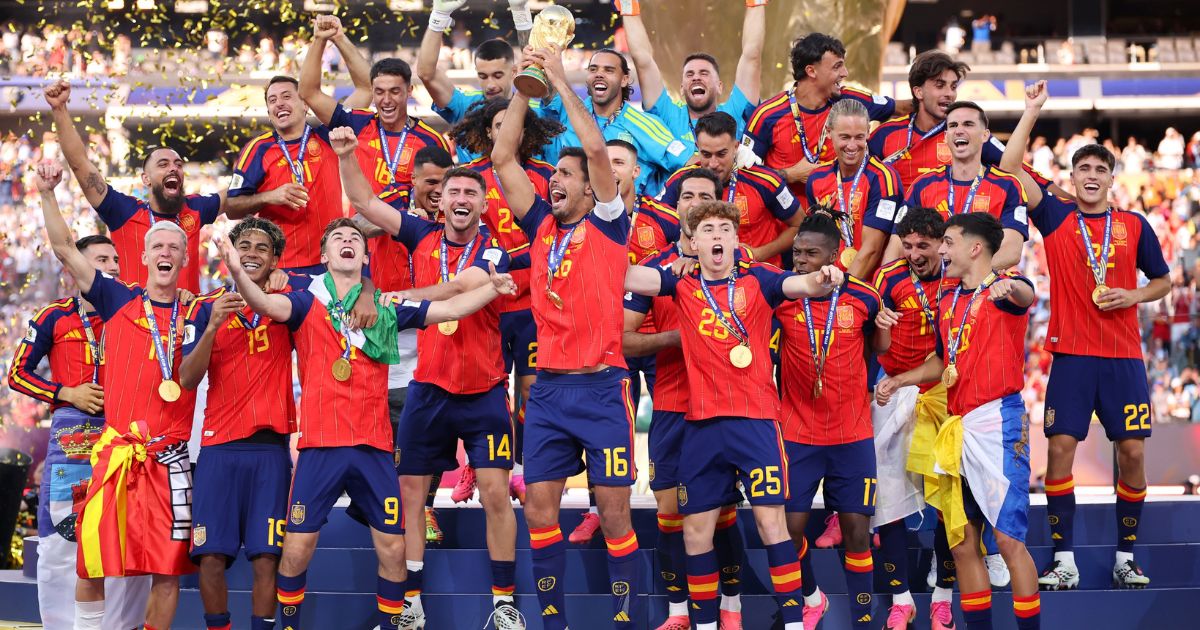
History has a funny way of repeating itself. Sixteen years after lifting their first FIFA World Cup with a tense 1-0 victory over the Netherlands in Johannesburg, Spain are world champions once again after defeating Argentina by the same scoreline in the 2026 FIFA World Cup final.
ALSO READ: The Incredible Story Behind The Iconic Photo Of Lionel Messi & Baby Lamine Yamal.
While the two matches unfolded in different eras, against different opponents and with different generations of players, the similarities are impossible to ignore. Both finals were defined by defensive discipline, fine margins and a single decisive goal that secured football’s greatest prize.
For Spain, 2026 is more than just another World Cup triumph. It represents the arrival of a new golden generation that has followed in the footsteps of the legendary side that conquered the world in South Africa.
Spain lift the @FIFAWorldCup trophy for the second time in their history! 🏆🇪🇸 pic.twitter.com/2r7nIJGRsE
— FIFA (@FIFAcom) July 19, 2026
A Familiar Scoreline On Football’s Biggest Stage
Unlike the thrilling 2022 final between Argentina and France, Sunday’s showpiece was a tense tactical battle from the opening whistle.
Spain dominated possession for long spells, patiently probing for an opening, while Argentina looked to frustrate their opponents before launching quick counterattacks through Lionel Messi and Julián Álvarez. Chances were few and every tackle carried enormous significance as neither side wanted to make the mistake that would decide the final.
Eventually, Spain found the breakthrough they had been searching for.
That solitary goal proved enough as La Roja once again demonstrated the defensive resilience that has become synonymous with their greatest triumphs. Argentina pushed relentlessly for an equaliser during the closing stages, but Spain held firm to secure a second FIFA World Cup title.
Echoes Of Johannesburg 2010
For Spanish supporters, the scenes felt remarkably familiar.
Back in 2010, Spain defeated the Netherlands 1-0 after extra time thanks to Andrés Iniesta’s unforgettable winner. That final was also an attritional contest, with clear opportunities limited as both teams battled for every inch of the pitch.
The Netherlands finished the match with 10 men after defender John Heitinga was sent off in extra time before Iniesta’s decisive strike finally settled one of the most physical World Cup finals ever played.
Sixteen years later, Spain once again found themselves celebrating a 1-0 victory on football’s biggest stage.
Although the circumstances differed, the outcome was identical. Another narrow victory. Another defensive masterclass. Another World Cup trophy.
𝐒𝐏𝐀𝐈𝐍'𝐒 𝐌𝐀𝐆𝐈𝐂 𝐌𝐎𝐌𝐄𝐍𝐓 🤩🌟
— SuperSport Football ⚽️ (@SSFootball) July 19, 2026
Ferran Torres breaks the deadlock in New Jersey 🇪🇸💥
📺 Stream #FIFAWorldCup2026 on DStv: https://t.co/B0jLrQW5cc pic.twitter.com/tP3AKFRKyO
From Iniesta To Yamal
The contrast between Spain’s two World Cup-winning generations perfectly illustrates the nation’s remarkable ability to reinvent itself.
The 2010 champions were built around icons such as Iker Casillas, Carles Puyol, Xavi Hernández, Xabi Alonso, Sergio Busquets, David Villa and Andrés Iniesta. Their patient possession football redefined the modern game and ushered in one of international football’s greatest dynasties.
This new generation carries a different identity but the same winning mentality.
Led by teenage sensation Lamine Yamal alongside midfield maestros Pedri, Rodri and Fabián Ruiz, Spain have blended technical brilliance with greater attacking directness throughout the tournament. Their performances suggested they were the best team in the competition long before reaching the final, and Sunday’s victory confirmed their status as worthy world champions.
Heartbreak For Argentina
For Argentina, the defeat brings an end to their hopes of becoming the first nation since Brazil in 1962 to successfully defend the FIFA World Cup.
Lionel Scaloni’s side had once again produced an outstanding tournament, overcoming Egypt, Switzerland and England to reach a second consecutive World Cup final. Many hoped Lionel Messi could finish his extraordinary international career with back-to-back World Cup titles, but Spain’s disciplined display denied the Albiceleste captain one final fairytale ending.
Despite the disappointment, Argentina’s achievements over the past decade remain extraordinary, with multiple major international trophies cementing their place among football’s modern greats.
A New Era Begins
Spain’s triumph feels symbolic in more ways than one.
In 2010, they announced themselves as football’s dominant force by winning their first World Cup. In 2026, they have reminded the world that another generation is ready to write its own chapter in Spanish football history.
Remarkably, both triumphs arrived through identical 1-0 scorelines in the final. Different opponents. Different players. The same outcome.
For Spain, history has repeated itself in the most beautiful way possible, as La Roja stand on top of the footballing world once again.

BetJets News is crafted by a team of dedicated sports writers and betting experts. With deep knowledge of soccer, cricket, rugby, and more, our contributors deliver insightful tips, match previews, and betting strategies to help you make smarter bets.