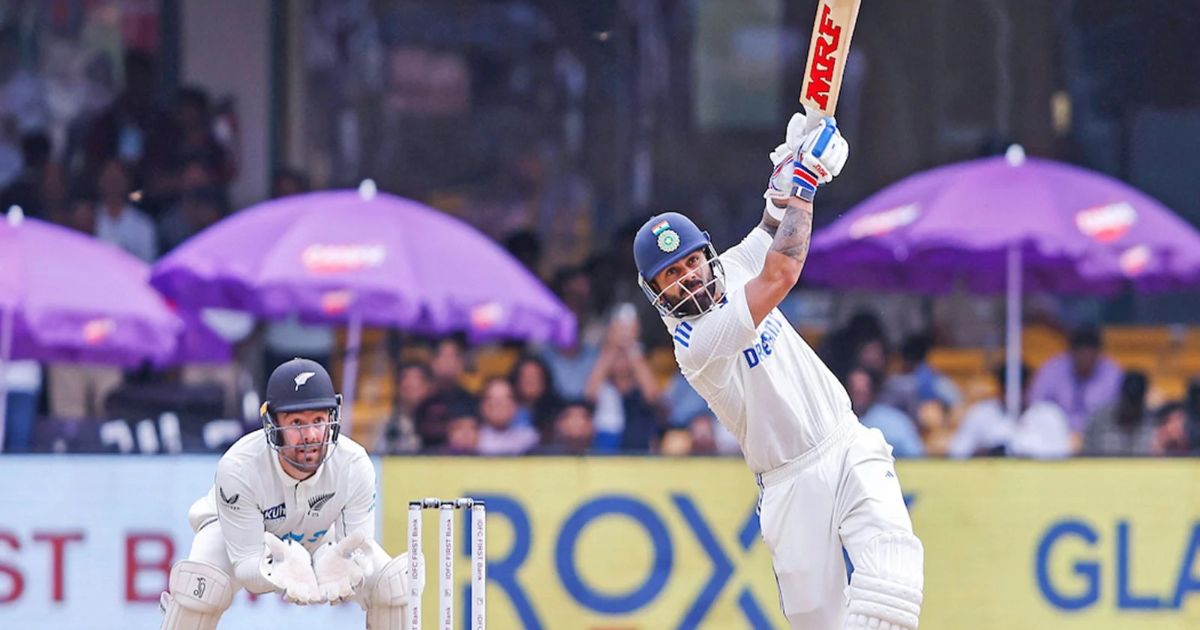
Cricket fans believe baseball is easy. Baseball fans think cricketers wouldn’t survive against elite Major League pitchers. Now, a viral social media debate has reignited one of sport’s most fascinating arguments: which game is actually tougher?
ALSO READ: Marco Jansen Makes History As World’s No. 1 Test Bowler & All-Rounder.
The debate exploded on X this week after footage of a cricketer taking part in baseball-style batting practice prompted supporters of both sports to defend their favourite pastime.
The timing couldn’t be better, with Major League Baseball’s MLBx Mumbai event bringing cricket and baseball stars together in India, further fuelling comparisons between two sports that share plenty of similarities but demand very different skills.
Both involve hitting a ball, scoring runs and dismissing batters. However, from the equipment and techniques to the physical and mental demands, the differences are enormous.
So, which sport is genuinely more difficult? Let’s settle the debate by examining batting, bowling, fielding and endurance.
Cricketers making baseball look like the easiest sport ever 😭⚾ pic.twitter.com/Jj5YYqTL2C
— Vinayak (@midwicket_18) October 25, 2026
Batting: Is Hitting A Baseball Harder Than Facing Fast Bowling?
Baseball supporters have a compelling argument when it comes to batting.
Major League pitchers regularly deliver fastballs exceeding 150 km/h, with MLB’s Statcast data showing that four-seam fastballs averaged approximately 94.6 mph (152 km/h) during the 2026 season.
Some pitchers can even exceed 100 mph (161 km/h), leaving batters with a fraction of a second to recognise the delivery, decide whether to swing and make contact.
Unlike cricket bats, which have a broad, flat striking surface, baseball bats are round and have a relatively small sweet spot. Making clean contact with a moving baseball requires extraordinary hand-eye coordination and timing.
Americans really think cricket is easier than baseball ?
— Sohel. (@SohelVkf) October 26, 2026
Alright, bro, bring your best baseball player and ask him to face these deliveries. pic.twitter.com/OsU10gvFBg
The difficulty is reflected in baseball’s statistics. A batting average of .300 is considered excellent, despite meaning that a player records a hit in only 30% of official at-bats.
However, cricket supporters would argue that baseball players don’t have to deal with one of the most unpredictable elements in their sport: the pitch.
A cricket ball can swing through the air, seam off the surface, bounce sharply or spin dramatically, forcing batters to adjust their technique almost instantaneously.
Research examining cricket batting found that deliveries travelling at 150 km/h take approximately 0.48 seconds to reach the batter, leaving extremely little time to make decisions and execute shots.
Cricketers must also protect their wickets, manage the risk of dismissal and adapt their approach depending on whether they’re playing a T20 match, a 50-over international or a five-day Test.
The verdict: Baseball arguably demands greater precision when making clean contact, while cricket requires greater versatility against different deliveries and playing conditions.
Bowling vs Pitching: Who Has The Tougher Job?
Baseball pitchers are among the most explosive athletes in professional sport.
They generate extraordinary velocity through a complex throwing motion, combining lower-body power, rotational force and precise arm mechanics to deliver fastballs, sliders, curveballs and changeups.
Their challenge isn’t simply throwing the ball quickly. It’s placing deliveries accurately while changing speed and movement to deceive batters.
“cricket is harder than baseball”
— Justin Martinez Enthusiast (@JMartEnthusiast) October 26, 2026
tell a cricket player to hit that 😭😭😭 pic.twitter.com/5Nro2X8bcR
Cricket fast bowlers face a different challenge.
Unlike baseball pitchers, who deliver the ball from a stationary mound, fast bowlers build momentum through a run-up before releasing the ball with a largely straight arm.
They must control swing, seam movement, bounce and variations in pace while maintaining accuracy over potentially long spells.
In Test cricket, a frontline fast bowler might deliver 20 or more overs in a day, equivalent to at least 120 legal deliveries, often in punishing heat.
The physical demands can be enormous, particularly when bowlers are required to return for repeated spells across several days.
Spin bowling introduces another dimension altogether, with bowlers relying on revolutions, flight, deception and subtle variations rather than raw speed.
The verdict: Baseball pitching places extraordinary demands on explosive power and precision, while cricket bowling requires a broader range of techniques and, particularly in Test matches, sustained physical endurance.
Fielding: Gloves vs Bare Hands
This is where cricket fans believe they have a particularly strong case.
With the exception of wicketkeepers, cricket fielders catch a hard leather ball without gloves, often while diving at full stretch or standing just metres away from the batter.
Slip fielders must react to edges travelling at considerable speed, while close-in fielders risk being struck by powerful shots.
The courage, reflexes and concentration required are remarkable.
However, dismissing baseball fielding as easier simply because players wear gloves would be a mistake.
Cricket Vs Baseball on timeline. 🧘♂️ pic.twitter.com/AjaX0iz2Sn
— Mufaddal Vohra (@mufaddal_vohra) October 27, 2026
Baseball fielders must combine quick reactions with precise throws, often needing to collect a ball, transfer it from glove to hand and hit a target in one fluid movement.
Infielders frequently have only moments to complete a play, while outfielders must judge towering fly balls and make accurate long-distance throws.
A published study comparing throwing performance among baseball and cricket players found that the baseball participants threw faster and more accurately under the tested conditions, although the small sample means the findings should not be treated as a definitive comparison of elite professionals.
Lemme know if a cricket player could ever do this pic.twitter.com/7pa1xd7KkA
— Crobin Carol Enthusiast (@CorbrielCarreno) October 26, 2026
The verdict: Cricket has the stronger argument for the difficulty of bare-handed catching, while baseball’s combination of fielding, throwing accuracy and rapid decision-making is equally impressive in a different way.
Endurance: Five Days Of Test Cricket vs Nine Innings Of Baseball
If we’re talking about physical and mental endurance, cricket has an especially strong argument.
A Test match can last five days, with players spending approximately six hours on the field each day. Batters may occupy the crease for several hours, while bowlers are required to maintain their intensity through repeated spells.
The mental demands are equally challenging. A batter might survive hundreds of deliveries, only to lose their wicket following a momentary lapse in concentration.
Conditions can also change dramatically throughout a match. A pitch that offers little assistance to bowlers on the opening day might become increasingly difficult to bat on as cracks develop and the surface deteriorates.
Baseball, meanwhile, is traditionally played over nine innings, with matches generally lasting considerably less time than a full day of Test cricket.
However, baseball’s physical demands should not be underestimated.
MLB teams play a gruelling 162-game regular season, often competing on consecutive days while travelling across the United States and Canada.
Starting pitchers typically receive four or five days between appearances, reflecting the physical strain of repeatedly delivering high-velocity pitches.
While individual baseball games are shorter, maintaining elite performance throughout such a demanding season presents its own considerable challenges.
The verdict: Cricket wins the argument for endurance within a single match, particularly in the Test format, but baseball’s relentless professional schedule makes season-long durability an important counterargument.
Could A Cricketer Succeed In Major League Baseball?
Perhaps the most interesting question emerging from the online debate is whether elite cricketers could successfully transition into professional baseball, or vice versa.
After all, players such as AB de Villiers, Virat Kohli and Jos Buttler have demonstrated extraordinary hand-eye coordination throughout their cricket careers.
But would those skills translate into hitting a 160 km/h fastball with a round bat?
There is certainly some overlap, particularly in timing, anticipation, athleticism and the ability to track a moving ball.
However, the differences in batting mechanics, scoring systems and defensive techniques mean that success in one sport would not automatically translate into success in the other.
The recent MLBx Mumbai event provided an entertaining glimpse into this crossover, bringing Indian cricket stars together with former MLB players, including Jake Arrieta, Adrián González and Nick Swisher.
Yet batting practice and exhibition events are very different from competing against elite professional opponents under match conditions.
A world-class cricketer might possess the natural ability to become an excellent baseball player, but would still require considerable technical training and experience.
The same would apply to a baseball star attempting to master cricket’s swing, seam and spin bowling.
The Final Verdict: Is Cricket Really Tougher Than Baseball?
So, after examining batting, bowling, fielding and endurance, which sport comes out on top?
The answer depends largely on how we define difficulty.
Baseball has a compelling claim when it comes to the precision required to hit elite pitching. Making clean contact with a round bat against deliveries exceeding 150 km/h is an extraordinary skill, while the explosive physical demands placed on pitchers and fielders should not be overlooked.
Cricket, meanwhile, offers greater variety in batting conditions, demands proficiency against both pace and spin, and requires exceptional concentration and endurance, particularly in the five-day format.
For me, cricket narrowly edges baseball as the tougher all-round sport, primarily because of the variety of skills and conditions players must master, combined with the physical and mental demands of Test cricket.
However, that doesn’t mean hitting a baseball is easier than hitting a cricket ball. In fact, baseball arguably presents the more difficult challenge when it comes to consistently making clean contact.
Ultimately, both sports demand extraordinary levels of skill, athleticism and dedication, and neither deserves to be dismissed as easy.
The debate might never produce a universally accepted winner, but it has certainly reminded supporters just how impressive the world’s best cricketers and baseball players really are.
What do you think? Is cricket the tougher sport, or are baseball fans right to defend America’s favourite pastime?

Lwanele is the Content Manager for BetJets News and has dedicated six years to creating top-notch sports betting content for major bookmakers, establishing himself as a trusted source for betting advice. As the resident tipster for TAB’s popular TV show Racing Today, he specialises in cricket, MMA, and soccer betting. Known for his keen analysis and practical tips, Lwanele provides BetJets readers with the tools they need to approach betting with confidence and strategy.