On 13 July 2014, Germany stood on top of the footballing world.
Mario Götze’s extra-time winner against Argentina completed one of the greatest footballing projects the modern game has ever seen. Fourteen years after the humiliation of Euro 2000, Germany had rebuilt itself through elite coaching, world-class academies and a relentless focus on youth development. They were deserved world champions and looked destined to dominate international football for years to come.
ALSO READ: Bafana Bafana’s Top 5 Performers At The 2026 FIFA World Cup.
Twelve years later, that vision has crumbled.
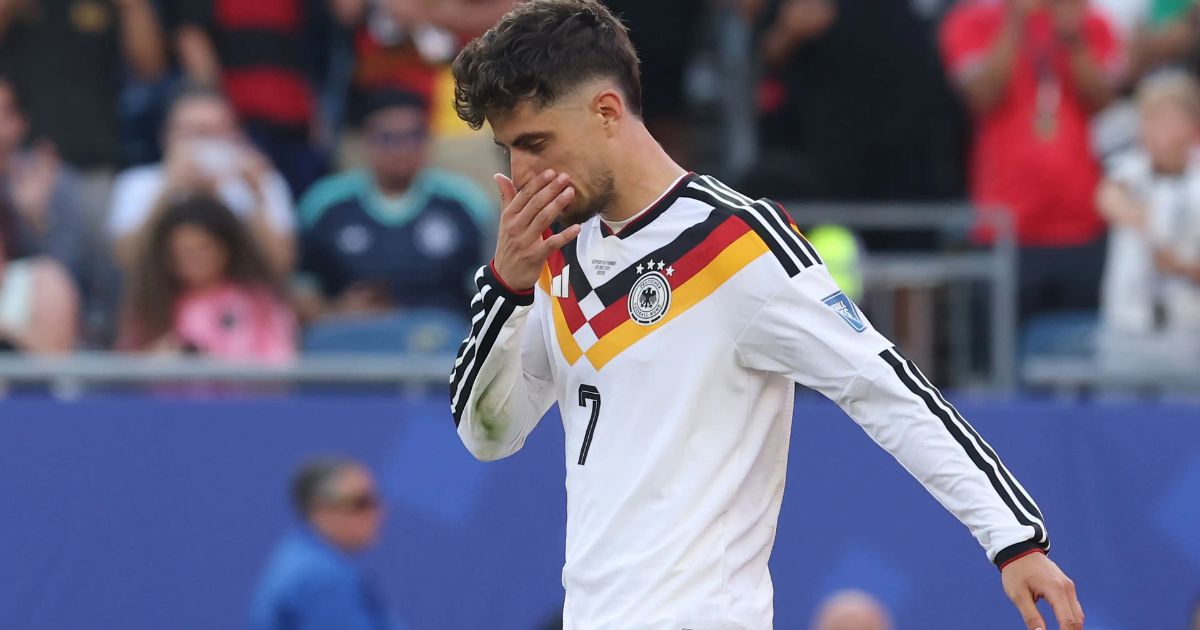
Germany have now suffered three consecutive disappointing FIFA World Cups, culminating in another painful exit after losing on penalties to Paraguay in the Round of 32. It was their first-ever World Cup penalty shootout defeat and another chapter in a decline that has become impossible to ignore.
▪️2014: Champions 🏆
— ESPN UK (@ESPNUK) June 29, 2026
▪️2018: Group stage ❌
▪️2022: Group stage ❌
▪️2026: Round of 32 ❌
Germany haven’t been the same at the World Cup since they won it in 2014 😬 pic.twitter.com/mIli2RfPUB
This is no longer a blip. It is a footballing identity crisis. The question is no longer why Germany failed at the 2026 World Cup.
The question is how one of football’s greatest nations has spent more than a decade trying and failing to rediscover itself.
The 2014 Hangover
Ironically, Germany’s greatest success may also have planted the seeds of its decline.
The team that conquered Brazil in 2014 was one of the most complete international sides ever assembled. Manuel Neuer revolutionised goalkeeping. Philipp Lahm redefined the full-back role. Toni Kroos dictated games like few midfielders in history. Mats Hummels and Jérôme Boateng formed one of the world’s best defensive partnerships, while Miroslav Klose became the World Cup’s all-time leading goalscorer.
That generation set an impossibly high standard.
Instead of beginning a gradual rebuild after 2014, Germany largely tried to preserve what had already worked. Joachim Löw remained in charge until 2021 despite the disastrous 2018 World Cup campaign, and the transition to a younger generation happened more slowly than many expected. By the time meaningful change arrived, several rival nations had already overtaken Germany.
Great international teams are constantly evolving.
Germany spent too long looking backwards.
Where Have All The Strikers Gone?
Perhaps the most obvious sign of Germany’s decline is the disappearance of the traditional German No. 9.
For decades, Germany produced elite goalscorers almost effortlessly.
Gerd Müller.
Rudi Völler.
Jürgen Klinsmann.
Oliver Bierhoff.
Miroslav Klose.
Even Mario Gomez, while never matching Klose’s international legacy, was one of Europe’s most feared strikers during his peak years.
Since then, the production line has almost stopped.
Germany have experimented with Timo Werner, Kai Havertz, Niclas Füllkrug, Deniz Undav and Nick Woltemade. Each has enjoyed success at club level, but none has become the ruthless, world-class centre-forward capable of deciding the biggest international matches.
Instead, Germany have increasingly relied on false nines, fluid attacking systems and technically gifted midfielders drifting into advanced positions.
It has often produced attractive football.
It has rarely produced enough goals when tournaments become tight.
The irony is striking.
Germany once defined the modern centre-forward.
Now they are searching for one.
The Missing Centre-Back Problem
The problems do not end in attack.
Germany also appear to have lost their ability to produce world-class central defenders.
For decades, there was always another elite centre-back waiting in the wings.
Franz Beckenbauer.
Jürgen Kohler.
Matthias Sammer.
Per Mertesacker.
Mats Hummels.
Jérôme Boateng.
Today, Antonio Rüdiger remains one of the world’s finest defenders.
Beyond him, however, Germany are still searching for a long-term partnership capable of matching those that came before.
Jonathan Tah has been dependable. Nico Schlotterbeck has shown enormous promise but has struggled with injuries. Other defenders have shown flashes without fully convincing on the biggest stage.
Modern football places enormous demands on centre-backs.
They must defend huge spaces, build attacks, win aerial duels and cope with increasingly athletic forwards.
Germany simply have not produced enough defenders capable of excelling in every aspect of the role.
The Bundesliga Has Changed
The Bundesliga remains one of Europe’s strongest leagues.
But it is not producing the same variety of German players it once did.
German clubs now recruit more aggressively from around the world, increasing competition for academy graduates. At the same time, youth development has increasingly prioritised technically gifted, versatile footballers over specialist profiles such as dominant centre-backs and penalty-box strikers.
That is not necessarily a flaw.
It has helped produce extraordinary talents like Jamal Musiala and Florian Wirtz.
But it has also left Germany unbalanced.
The country continues producing elite attacking midfielders.
It no longer consistently produces elite defenders or centre-forwards.
Bayern’s Dominance Has Changed The Landscape
Another subtle factor has been Bayern Munich’s prolonged domestic dominance.
German football once thrived on fierce competition between Bayern Munich, Borussia Dortmund, Werder Bremen, Stuttgart, Hamburg and Schalke.
Several clubs regularly challenged for titles while simultaneously producing internationals.
Today, Bayern remain the benchmark, but the competitive balance within German football has shifted significantly.
While the Bundesliga still develops excellent players, fewer clubs are consistently producing the spine of the national team in the way they once did.
Whether that has directly contributed to Germany’s decline is open to debate.
It has certainly changed the environment in which German talent develops.
The Toni Kroos Void
Replacing great players is never easy, but replacing Toni Kroos may have been impossible.
Kroos controlled football matches in ways statistics rarely capture. Germany have produced talented midfielders since his retirement. None has replicated his ability to control the rhythm of elite international football.
When matches become chaotic, Germany often look rushed. The calm that once defined them has disappeared.
Sometimes the most difficult player to replace is not the most spectacular one. It is the one who makes everyone else better.
Germany Have Lost Their Physical Edge
Germany once intimidated opponents before a ball had even been kicked. They combined technical quality with size, aggression and relentless athleticism.
Today’s Germany remain technically excellent. Physically, however, they often look less imposing than many of their rivals. That was evident against Paraguay.
Germany dominated possession and attempted far more shots, yet Paraguay matched them physically, defended courageously and ultimately survived long enough to win on penalties.
Tournament football is rarely won through possession alone.
It is won through duels.
Germany are no longer dominating enough of them.
Leaders Are Becoming Harder To Find
Every great German side has possessed natural leaders.
Beckenbauer.
Matthäus.
Kahn.
Ballack.
Lahm.
Schweinsteiger.
Klose.
Neuer.
Today’s squad undoubtedly contains talented footballers. Whether it contains enough leaders remains another question.
Joshua Kimmich has embraced responsibility, while Rüdiger provides experience at the back.
Yet during difficult moments, Germany often appear to lack the calm authority that defined previous generations. Against Paraguay, even the penalty shootout reflected that uncertainty.
Germany, once synonymous with composure from the spot, lost their first-ever World Cup shootout. That alone felt symbolic.
For the first time in men’s World Cup history, Germany have lost a penalty shootout 🤯
— B/R Football (@brfootball) June 30, 2026
✅ 1982 Semifinals: West Germany defeats France 5-4 on PKs
✅ 1986 Quarterfinals: West Germany defeats Mexico 4-1 on PKs
✅ 1990 Semifinals: West Germany defeats England 4-3 on PKs
✅ 2006… pic.twitter.com/zn7QxcZHTu
The Rest Of The World Has Improved
Germany’s decline has also coincided with football becoming more competitive than ever.
France possess extraordinary depth.
Spain have successfully rebuilt.
England’s academy system continues producing elite talent.
Meanwhile, countries like Morocco, Japan, Ecuador and Paraguay have demonstrated that tactical discipline, organisation and belief can bridge the gap against traditional powers.
Germany are not simply getting worse.
Everyone else has become better.
That leaves far less room for complacency.
Is There Hope?
Despite everything, Germany still possess outstanding young footballers. Jamal Musiala remains one of the world’s brightest talents. Florian Wirtz has developed into one of Europe’s premier creators.
Several exciting prospects continue emerging from Bundesliga academies.
Julian Nagelsmann also remains one of football’s brightest young coaches, despite facing renewed scrutiny following another disappointing World Cup exit.
The talent exists.
The challenge is producing a complete team rather than simply collecting gifted individuals.
Germany rebuilt once before after Euro 2000.
There is no reason they cannot do so again.
Final Thoughts
Germany once produced the world’s best goalkeepers.
The world’s best centre-backs.
The world’s best No. 9s.
The world’s best tournament team.
Today, they are searching for all four.
That is the real story behind Germany’s decline.
The defeat to Paraguay should not simply be remembered as another World Cup upset.
It should be remembered as the moment Germany finally accepted that replacing a coach, tweaking a tactical system or introducing another talented youngster will not be enough.
The road back to the top requires something much bigger. It requires another complete reinvention of German football.

BetJets News is crafted by a team of dedicated sports writers and betting experts. With deep knowledge of soccer, cricket, rugby, and more, our contributors deliver insightful tips, match previews, and betting strategies to help you make smarter bets.