Eight years after one of the biggest scandals in cricket history, Sandpapergate, Australia are finally back in South Africa for a Test series.
ALSO READ: Why The Proteas Need Aiden Markram At His Best Against Australia.
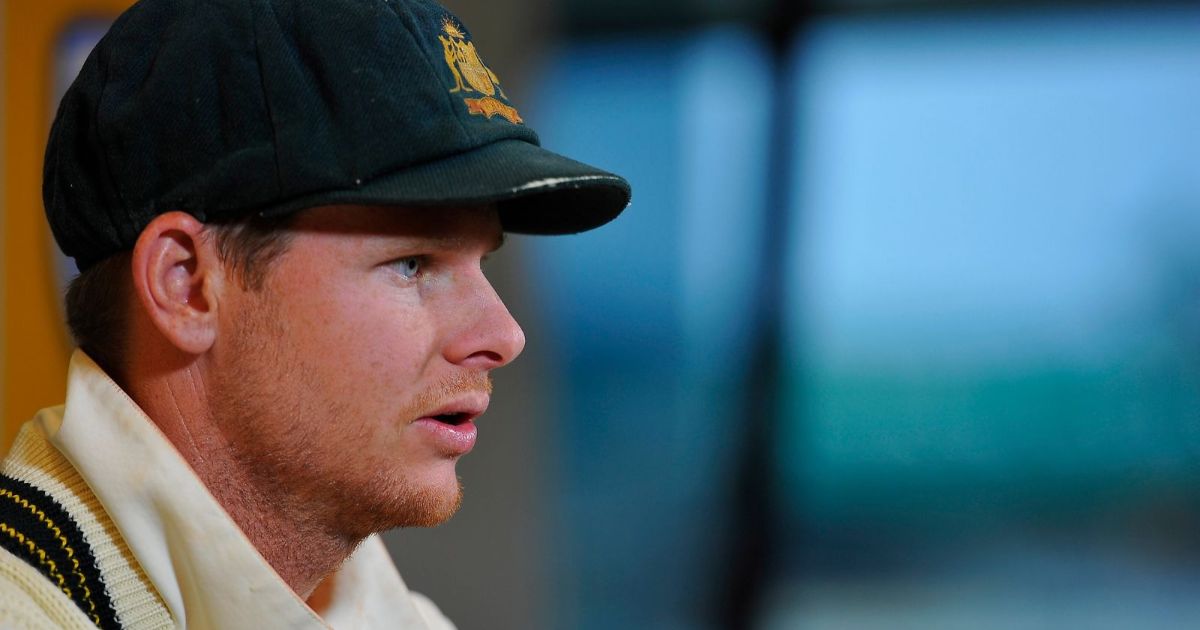
The Aussies haven’t played Test cricket on South African soil since their infamous 2018 tour, when what had already been a bitter and controversial series descended into chaos at Newlands. Cameron Bancroft was caught attempting to alter the ball with sandpaper, captain Steve Smith and vice-captain David Warner were implicated, and Australian cricket was plunged into crisis.
Smith and Warner were subsequently banned for a year, Bancroft for nine months, and Australia’s cricket culture was placed under the microscope. What happened became known around the world by one word: Sandpapergate.
As Australia prepare to face the Proteas in Durban on Friday before eventually returning to the scene of the scandal in Cape Town for the third Test, here’s how one of cricket’s most extraordinary controversies unfolded.
A Series Already Boiling Over
The 2018 series between South Africa and Australia was explosive long before anybody had heard the words “Sandpapergate”.
Australia arrived for a four-Test contest featuring two outstanding teams. Smith’s tourists had recently thrashed England 4-0 in the Ashes, while the Proteas boasted a side containing the likes of AB de Villiers, Hashim Amla, Faf du Plessis, Kagiso Rabada, Vernon Philander and Morne Morkel.
The cricket was compelling, but tensions quickly escalated.
Australia won the opening Test in Durban by 118 runs, but the match was overshadowed by a confrontation between Warner and Quinton de Kock on the staircase leading to the dressing rooms. Warner had to be restrained by teammates, with both players subsequently sanctioned by the ICC.
Rabada then became the centre of attention during South Africa’s series-levelling victory in Gqeberha after making physical contact with Smith while celebrating the Australian captain’s dismissal. Initially suspended for two Tests, Rabada successfully appealed and was cleared to play at Newlands.
By the time the teams reached Cape Town, there was genuine hostility surrounding the series.
Nobody knew what was coming next.
March 24, 2018: The Cameras Spot Something
The moment that changed Australian cricket occurred on the third day of the third Test at Newlands.
South Africa were building a strong position in their second innings when Australian opener Cameron Bancroft was picked up by SuperSport’s television cameras working on the ball with a small yellow object.
The footage immediately attracted attention.
Bancroft could be seen rubbing the object against the rough side of the cricket ball. Shortly afterwards, when he apparently realised the television cameras had spotted what he was doing, he attempted to conceal it.
He eventually shoved the object down the front of his trousers.
The pictures were replayed on television and then shown on the giant screen at Newlands.
The secret was out.
On-field umpires Richard Illingworth and Nigel Llong approached Bancroft and questioned him. According to Cricket Australia’s subsequent reconstruction of events, Bancroft produced a black sunglasses pouch from his pocket when speaking to the officials rather than the yellow object he had been seen using.
The ball was inspected but wasn’t replaced.
The incident, however, was already becoming a global story.
The Initial Explanation: Yellow Tape And Dirt
After play, Smith and Bancroft walked across the Newlands outfield together to face the media.
What followed was remarkable.
Rather than deny an attempt had been made to tamper with the ball, they admitted it.
Bancroft initially explained that he had used yellow adhesive tape, collecting granules from rough areas around the pitch and applying them to the ball in an attempt to alter its condition and generate reverse swing.
He also admitted that he panicked after seeing himself shown on the big screen and attempted to hide the object inside his trousers.
Then Smith spoke.
The Australian captain revealed that the plan had been discussed during the lunch break and described it at the time as a decision involving the team’s “leadership group”.
Smith accepted responsibility as captain and confirmed the coaches hadn’t been involved. He also insisted he wouldn’t resign from the captaincy and said it was the first time such an incident had happened under his leadership.
The admissions transformed what could have been viewed as the actions of one player into something much bigger.
This had been planned.
Why Were Australia Tampering With The Ball?
The objective was reverse swing.
As a cricket ball gets older, bowlers can sometimes make it move through the air in the opposite direction to conventional swing. Maintaining one side of the ball while allowing the other to become rough is an important part of producing that movement.
There are legal ways of looking after a cricket ball.
Using a foreign object to artificially alter its condition is not one of them.
Australia were struggling to generate the reverse swing they wanted as South Africa strengthened their position in the Test. According to the account initially given by Smith and Bancroft, the plan was therefore devised during the lunch break to accelerate the deterioration of one side.
Cricket Australia’s later investigation established that the implement wasn’t adhesive tape covered in dirt after all.
It was sandpaper.
That revelation gave the scandal its permanent name.
The ICC Acts First
The first punishments came from the ICC.
Smith was fined 100% of his match fee and suspended for the fourth and final Test of the series. Bancroft was fined 75% of his match fee and received three demerit points after admitting to attempting to change the condition of the ball.
But those punishments were only the beginning.
Back in Australia, the reaction was enormous.
The scandal went well beyond sport. Australia’s men’s cricket team occupies a significant place in the country’s national identity, and the images from Cape Town generated outrage among supporters, former players, politicians and sponsors.
Cricket Australia dispatched senior officials to South Africa to investigate exactly what had happened.
Smith and Warner stood down from their leadership positions for the remainder of the Newlands Test, with wicketkeeper Tim Paine taking charge on the field.
South Africa went on to win the match by 322 runs and take a 2-1 series lead.
But the cricket had almost become secondary.
Warner Was Identified As The Architect
Cricket Australia’s investigation provided a different and more detailed version of events than the initial press conference.
The governing body concluded that David Warner had been chiefly responsible for developing the plan.
According to CA’s findings, Warner instructed Bancroft on how to attempt to alter the condition of the ball using sandpaper and demonstrated the method to him.
Bancroft then carried out the plan.
Smith, meanwhile, was found to have had knowledge of the potential scheme but failed to prevent it from being implemented.
Crucially, Cricket Australia’s investigation did not substantiate Smith’s initial suggestion that the wider leadership group had collectively developed the plan.
The three players formally charged by CA were Warner, Smith and Bancroft.
Australia’s coaches were cleared of involvement.
Smith, Warner And Bancroft Sent Home
The repercussions were swift.
Smith, Warner and Bancroft were removed from the touring squad and sent back to Australia before the fourth Test in Johannesburg.
Matthew Renshaw, Glenn Maxwell and Joe Burns were called up as replacements, while Paine became Australia’s captain.
Then came the punishments that stunned world cricket.
Cricket Australia banned Smith and Warner for 12 months from international and Australian domestic cricket.
Bancroft received a nine-month ban.
Warner was also barred from holding a leadership position within the Australian team in the future under the sanction imposed at the time. Smith was prohibited from holding a leadership role for at least another 12 months after completing his playing suspension, while Bancroft faced a similar leadership restriction.
The punishment was vastly more severe than the original ICC sanctions.
Cricket Australia wasn’t merely punishing an attempt to alter a ball.
It was responding to the damage the scandal had done to the reputation of Australian cricket.
The Tearful Press Conferences
The images that followed became almost as memorable as the incident itself.
Bancroft returned to Perth and apologised.
Warner faced the media in Sydney.
Smith’s press conference in particular became one of the defining moments of the scandal.
The former captain broke down repeatedly as he accepted responsibility for what had happened. His father, Peter, eventually escorted him away from the cameras.
Only days earlier, Smith had been captain of Australia and one of the greatest batters in the world.
Now his career was on hold and his reputation had been shattered.
For many Australians, that was the moment the true scale of Sandpapergate became apparent.
South Africa Complete A Historic Series Win
There was still one Test to play.
Without Smith, Warner and Bancroft, Australia arrived at the Wanderers in turmoil.
South Africa showed them no mercy.
Markram scored 152 in the first innings, while Philander ripped through Australia with six wickets in the second as the Proteas won by 492 runs, Australia’s heaviest Test defeat by runs at the time.
The victory completed a 3-1 series triumph for South Africa, their first home Test series win over Australia since readmission.
Morkel retired from international cricket following the match.
For South African cricket, it should have been remembered as one of the great series victories.
Instead, the tour will forever be inseparable from what happened at Newlands.
Sandpapergate Became Bigger Than Three Players
The scandal didn’t end when Smith, Warner and Bancroft were suspended.
It prompted a much broader examination of Australian cricket.
Cricket Australia commissioned an independent cultural review, led by the Ethics Centre, into the organisation and the men’s national team.
Its findings were damning.
The review concluded that Cricket Australia itself had contributed to an environment in which winning had become excessively important and recommended sweeping changes to the organisation’s culture and governance. It argued that CA’s leadership needed to accept a share of responsibility for the circumstances surrounding the scandal, without suggesting administrators were personally involved in the actual tampering.
Cricket Australia nevertheless refused calls to shorten the bans imposed on Smith, Warner and Bancroft.
Sandpapergate had therefore become about much more than a piece of sandpaper.
It forced Australia to ask difficult questions about what their national cricket team had become.
The Comebacks
All three players eventually returned to cricket, but their paths were very different.
Smith came back and quickly reminded the world of his extraordinary ability. His performances during the 2019 Ashes in England were among the finest of his career, and he eventually returned to a leadership position as Australia’s Test vice-captain.
Warner also returned to international cricket and remained a central figure in Australia’s side for several more years, helping them win the 2021 T20 World Cup and 2023 ODI World Cup before eventually retiring from international cricket.
Bancroft’s international comeback was much shorter. He returned to the Test team during the 2019 Ashes but was unable to permanently re-establish himself.
For all three, however, Cape Town remained part of their story.
Eight Years Later, Australia Are Back
Now the circle is about to close.
Australia begin their three-Test series against South Africa at Kingsmead in Durban on Friday, 9 October, before the teams travel to St George’s Park in Gqeberha.
Then comes Cape Town.
The third Test begins at Newlands on 27 October, Australia’s first Test at the ground since Sandpapergate.
Only a handful of members of Australia’s current set-up remain from that infamous Newlands Test, but Smith is among them. Josh Hazlewood has already acknowledged that Australia expect hostile South African crowds during their first Test tour of the country since 2018.
The circumstances are vastly different this time.
Australia arrive as a team that has undergone an enormous cultural transformation since 2018, while South Africa enter the series as the defending World Test champions after beating the Aussies at Lord’s in 2025.
But when the Australian team eventually walks back onto the field at Newlands later this month, the memories will be impossible to avoid.
The yellow object disappearing down Bancroft’s trousers.
Smith and Bancroft walking across the outfield to face the press.
The revelation that it was sandpaper.
The bans.
The tears.
And the scandal that changed Australian cricket.
Eight years later, Australia are finally back where it all happened.

Lwanele is the Content Manager for BetJets News and has dedicated six years to creating top-notch sports betting content for major bookmakers, establishing himself as a trusted source for betting advice. As the resident tipster for TAB’s popular TV show Racing Today, he specialises in cricket, MMA, and soccer betting. Known for his keen analysis and practical tips, Lwanele provides BetJets readers with the tools they need to approach betting with confidence and strategy.